The Deeper Roots of Joy
September 29, 2026
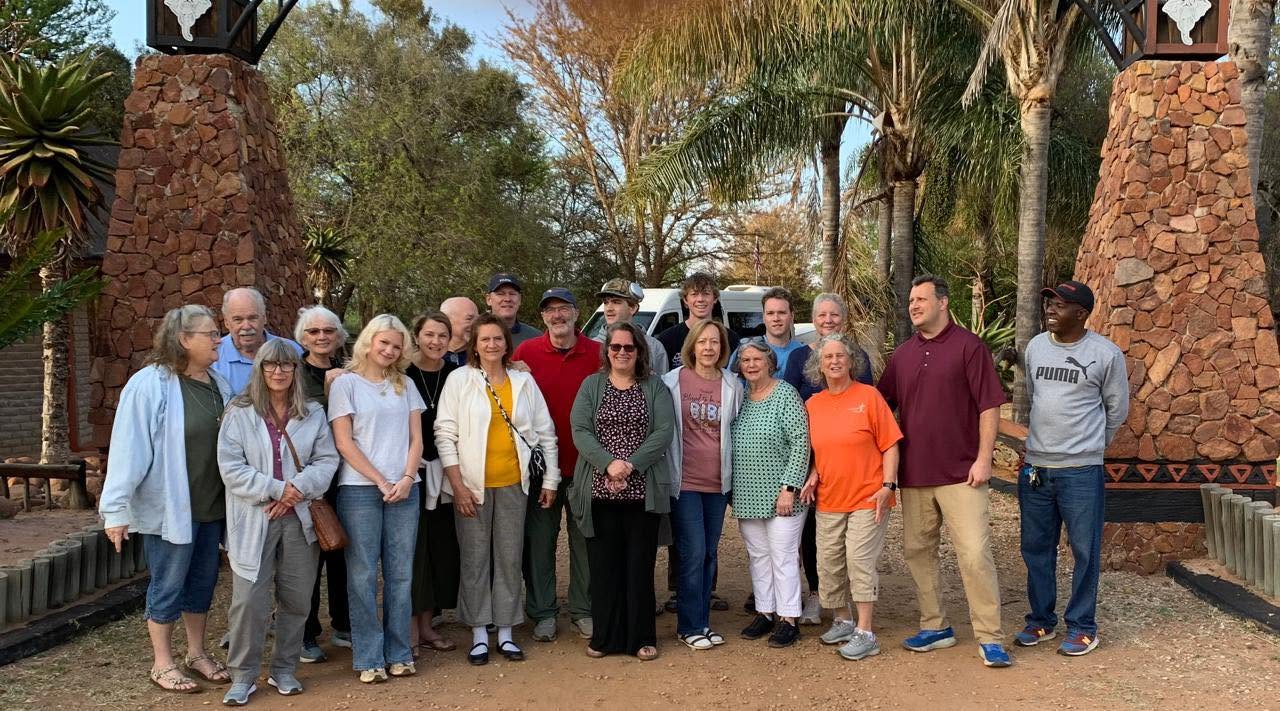
We recently hosted a wonderful short-term mission team from Spirit of Joy Lutheran Church in North Carolina. Their visit has had me thinking about something that all of us desire but sometimes struggle to find: joy.
Happiness and joy are words we often use interchangeably, but in my own mind there is a significant difference between the two.
Happiness can be a mountaintop experience. Something wonderful happens, we accomplish a goal, receive a gift, celebrate with family, or hear some good news, and we are happy. But mountaintop experiences usually do not last. Eventually, we have to walk back down the mountain and return to everyday life.
Joy seems different to me.
Joy may be quieter and less dramatic than happiness, but it is much more enduring. Happiness is often connected to what is happening around us. Joy comes from something much deeper within us. For me, joy is ultimately spiritual. It comes from knowing that God is present and that our lives have meaning and purpose even when our circumstances are difficult.
Our recent mission team demonstrated that kind of joy beautifully.
There are always challenges associated with a foreign mission trip. There are long flights and the expense of international travel. There is jet lag, unfamiliar food, different accommodations, the possibility of becoming ill far from home, and the reality of missing family and loved ones. Mission trips rarely go exactly according to plan.
Members of this team experienced some of those challenges while they were with us. Yet each morning they seemed to wake up with a sense of positive anticipation: What is God going to do today?
That attitude changed everything.
In the evenings, we would gather around an African campfire and talk about our day. Those are some of my favorite moments with our mission teams. The work is finished, the African sky becomes dark, the fire is burning, and people begin sharing what is on their hearts.
As I listened to this team, I sensed something deeper than happiness. I sensed genuine joy.
As Christians, we sometimes call this the joy of the Lord. That phrase can become so familiar that we forget what it really means. It is not simply a pleasant religious expression. It describes something very real—a deep sense of peace, gratitude, hope, and purpose that can remain with us through hardship and even tragedy.
I often say that I have the best job in the world. I really believe that. One of the reasons is that I have the privilege of living and serving alongside people who regularly remind me what genuine joy looks like.
Some of my greatest teachers have been the African children we serve.
By Western standards, many of these children have very little. Some come from families living in extreme poverty. Their home may be a small tin structure without electricity or indoor plumbing. The floor may be dirt. Several family members may sleep together in one small room. Food insecurity can be part of everyday life.
If we measured joy simply by possessions, these children should have very little reason to smile.
Yet that is not what I see.
I see children laughing with their friends. I see them running across our campus, kicking a soccer ball, singing, playing, and enjoying a good meal together. I see enormous smiles on faces that possess very little of what our Western culture tells us is necessary for happiness.
They continually remind me of a simple truth:
Stuff does not create joy.
That is one of the most valuable lessons our American mission-team members—especially our young people—can take home from Africa. We spend much of our lives accumulating things and pursuing experiences that promise happiness. There is nothing wrong with enjoying the blessings God gives us, but possessions make a poor foundation for joy. If our contentment depends entirely upon our circumstances, it will disappear as soon as those circumstances change.
I think about this in terms of two trees.
Imagine a young tree planted as part of a beautiful professional landscaping project. It is carefully positioned, watered, fertilized, staked, and tied so that it will grow straight. When the wind blows, the stakes help support it.
Now imagine another tree growing naturally in the African bush. No landscaper planted it. Nobody waters it during the dry season. There are no stakes holding it upright when the storms come.
That tree has to survive by putting down roots.
The winds actually encourage those roots to grow deeper. Season after season, the tree becomes strong enough to withstand conditions that might overwhelm a more protected tree.
Perhaps our lives are sometimes like that.
None of us enjoys adversity. I certainly would never suggest that suffering is pleasant or that we should go looking for hardship. But after more than eighty years of life, I have learned that some of the difficult seasons can produce surprisingly deep roots.
Challenges can teach us patience. Disappointment can teach us perseverance. Loss can teach us what truly matters. Serving people who have much less than we do can teach us gratitude.
And faith teaches us that we do not have to face any of those things alone.
Maybe that is one of the secrets of joy.
Joy does not require everything around us to be perfect. It does not require the absence of problems. It does not require wealth, comfort, perfect health, or even certainty about tomorrow.
Joy grows from deeper roots.
Our friends from Spirit of Joy reminded me of that during their time with us. The children we serve remind me of it almost every day.
And perhaps that is one of the unexpected gifts of mission work. We may travel across the world believing that we are going to Africa to give something to others, only to discover that God has something He wants to give us as well.
Sometimes we come intending to teach and discover that we are the students.
Sometimes we come hoping to bring joy and discover that joy was already waiting for us.
The deepest joy does not depend upon how easy the journey is. It depends upon how deep the roots have grown.